
New York
United States
Event Density
Institutional
Market
Media Mentions
Artist Activity
Collector Activity
Travel Relevance
Best Months
New York remains the gravitational center of the art world. The Whitney Biennial and Frieze Week overlap is producing an unusually dense May corridor. The market is hot for post-digital painting, but the conversation is shifting toward AI authorship and institutional decolonial reckoning.
Cultural Momentum Heat Map
Active trend signals driving New York's art world energy
Indigenous Futurisms
fadingPost-Digital Painting
fadingBody as Political Archive
fadingImmersive Export
fadingArchive as Repair
fadingProtest as Biennale Format
fadingEco-Materialism
fadingFossil Capitalization
fadingAnalogue Photography Revival
fadingQueer Nightlife Archives
fadingSacred Return
fadingQueer Archive Revival
fadingInstitutional Critique Reappraised
fadingMuseum Under Siege
fadingDecolonial Practice
fadingRepatriation Accelerating
fadingAntiquities Reckoning
fadingPolitical Censorship of Museums
fadingInstitutional Expansion Fever
fadingImmersive Art Globalization
fadingAlternative Fair Ecologies
fadingCollectibles Crossover
fadingRelic and Celebrity Commodity
fadingArt-Health Convergence
fadingIndependent Space Precarity
fadingCurrent Themes
What the conversation is about right now
Active Events
- Whitney Biennial 2026
- Frieze New York
- MoMA: Duchamp Survey
Signal Pipeline
Live signals flowing from our source universe into this city
Emerging Themes
(23)The ‘Hunger Games’ Red Carpet Was Peak Method Dressing
The ‘Traitors’ Winner ‘Felt So Guilty’ at the End
In ‘Much Ado,’ Tom Hiddleston and Hayley Atwell Will Make You Swoon
Tinto Brass Has Died. He Directed the Erotic Epic ‘Caligula.’
With GTA 6 Release, DoorDash and Other Food Delivery Apps Are Making a Killing
Market Shifts
(13)$33M Basquiat Leads Solid, Sluggish $146M Christie’s Contemporary Sale
Christie’s Notches a $145.9 M. Sale of 21st-Century Art, Led by a $32.9 M. Basquiat, amid Flagging Energy
Christie’s Notches a $145.9 M. Sale of 21st-Century Art, Led by a $32.9 M. Basquiat, amid Flagging Energy
Picasso, Kandinsky, and Baselitz Lead December Sales at Karl and Faber
Frieze Abu Dhabi Debuts to Brisk Sales and Confident Dealers
Curator Moves
(7)Drawing Center's Laura Hoptman Wins Curatorial Excellence Award
How Tiffany Studios Lit Up the Gilded Age
Krist Gruijthuijsen Named Director of Stedelijk Museum Amsterdam
Major Ana Mendieta retrospective to open at MoMA in December 2027.
Amsterdam’s Stedelijk Museum Names Krist Gruijthuijsen as Next Director
Breakout Works
(2)The Landing, Beloved Los Angeles Gallery with a Keen Eye for Pairing Historical and Contemporary Artists, Closes After 14 Years
The Landing, Beloved Los Angeles Gallery with a Keen Eye for Pairing Historical and Contemporary Artists, Closes After 14 Years
Institutional Shifts
(2)The New Museum Announces Partnership With Vega Foundation
Native Artist Receives $10K Grant to Revive Visor Craftmaking
Artists Rising
(1)Sydney Announces Basic Income Program For Artists
Talent Flow
Who's heating up — and cooling down
Upcoming Pulse
Countdown to the next cultural moments
Whitney Biennial 2026
Marcel Duchamp
Pierre Huyghe: UUmwelt
Frida and Diego: The Last Dream
Connected Trends
Movements rooted in or shaped by this city
Indigenous Futurisms
Institutionalized and still building. The Sydney Biennale 2026 centered First Nations practice and it wasn't a special program — it was the main event.
Post-Digital Painting
Still emerging — not enough independent source types to graduate yet. But the work is real. The question is whether critics will take it seriously.
Body as Political Archive
These practices share a refusal of representation-from-outside: the archive is not in the institution, it is in the body that has survived — tattooed, clothed, photographed on its own terms. The political stakes are not metaphorical.
Immersive Export
Immersive art is maturing into an exportable cultural product: private operators and global fairs sell attention and tourism rather than local artistic ecosystems.
Archive as Repair
The archive is no longer passive evidence; it’s an active site where recovery, restoration and ethical re‑framing meet artistic practice.
Protest as Biennale Format
The Venice Biennale has always been entangled with national power — that's its architecture. What's new is that artists and workers are no longer protesting at the gates; they are using the Biennale's own diplomatic visibility as amplification infrastructure, turning the ambassador's arrival into a press event for a counter-narrative.
Eco-Materialism
No longer a subgenre of environmental art — this is now the dominant critical frame for sculpture. The question is whether it can avoid becoming institutional wallpaper.
Fossil Capitalization
The market is cannibalizing history, stripping away the scientific value of fossils to fuel the insatiable hunger of private collectors for 'trophy' narratives.
Analogue Photography Revival
This is less nostalgia than a corrective: photographers are weaponizing analogue’s limits (grain, chance, constraint) to push back against flattened, endlessly reproducible digital imagery and reassert the bodily trace of the maker.
Queer Nightlife Archives
Institutions want queer ephemera for diversity and cachet, but the process of archivalizing nightlife risks sanitizing the very conditions that made those scenes politically potent — what gets collected often becomes what gets normalized.
Sacred Return
After a decade dominated by identity politics and institutional critique, younger artists appear to be reaching for frameworks that exceed the social — a hunger for the numinous that secular critical language has systematically failed to provide.
Queer Archive Revival
This is not mere nostalgia: institutions are converting once-policed queer ephemera into cultural capital and corrective history, with all the attendant tensions of curation and sanitization.
Institutional Critique Reappraised
The museum has assimilated its own critics; institutional critique is being historicized and aestheticized inside the very galleries it once tried to expose — raising the question whether critique becomes impotent when it’s curated.
Museum Under Siege
This is not a crisis of funding or attendance — it is a crisis of legitimacy. The American right has decided that cultural institutions are political enemies, and museums are now learning what it means to defend the premise of their own existence in a post-truth public square.
Decolonial Practice
At peak institutionalization — every major museum has a decolonial program. The dispute is whether structural change follows the rhetoric or if it's grant-cycle deep.
Repatriation Accelerating
Repatriation has moved from moral argument to administrative procedure, which is both a victory and a warning: the bureaucratization of return risks becoming a substitute for deeper reckoning with how collections were built in the first place.
Antiquities Reckoning
Repatriation gets the headlines, but the deeper story is that major American museums built significant parts of their ancient collections through a dealer network that was essentially a laundering operation. The Latchford and Phoenix cases are not anomalies — they are the business model, now being unwound in slow motion.
Political Censorship of Museums
The culture war has moved from Twitter to the boardroom. When the White House starts issuing directives about how the Smithsonian narrates American history, the museum is no longer a neutral civic space — it becomes a contested state apparatus. Gioni's arrival at the New Museum may be the art world's quiet hedge against what's coming.
Institutional Expansion Fever
The expansion reflex is the art world's answer to institutional anxiety: when the center feels politically precarious — the Smithsonian under White House fire, the Guggenheim leaking bacteria — the instinct is to build outward rather than shore up what exists. It is growth as displacement.
Immersive Art Globalization
Immersive art is less an aesthetic than a business model that globalizes spectacle: private cultural centers and biennial circuits buy in as audience-capture strategies, turning experience into a transnational commodity.
Alternative Fair Ecologies
The alternative fair ecology is no longer alternative — it is a parallel infrastructure with its own legitimacy, and the fact that Post-Fair is now internationalizing suggests that the critique of spectacle has itself become commercially viable, which is either encouraging or its own irony.
Collectibles Crossover
The art market spent a decade worrying about NFTs cannibalizing collector attention. The real disruption was analog all along: Heritage's numbers prove that pop-cultural collectibles are now a parallel asset class with their own blue-chip logic, auction infrastructure, and generational authority — one that doesn't need Sotheby's validation.
Relic and Celebrity Commodity
The auction house is becoming indistinguishable from the fan convention, and the museum is following. 'Collecting is getting broader' is the market's diplomatic phrasing for what is actually a demographic capture: fandom is now the primary engine of acquisition culture.
Art-Health Convergence
The museum is no longer just a symbolic body politic — it is a literal one, subject to health inspections, labor biosafety disputes, and therapeutic policy mandates. The Guggenheim Legionnaires' story is a perfect accidental metaphor: the institution that aspires to cultural vitality is leaking something dangerous into the air.
Independent Space Precarity
The art world celebrates the artists that independent spaces produced while allowing those spaces to die — a structural hypocrisy in which the ecosystem's soil is stripped away even as everyone admires the flowers it once grew.
Thought Leaders
Voices shaping the North America conversation
Ben Davis
National Art Critic
Artnet
Artnet's national critic and author of '9.5 Theses on Art and Class'.
Jason Farago
Art Critic
The New York Times
Critic at the NYT. Writes with a global, institutional perspective.
Jerry Saltz
Senior Art Critic
New York Magazine
Pulitzer Prize-winning critic. The most widely read art critic in America.
Sebastian Smee
Pulitzer-Winning Art Critic
The Washington Post
Pulitzer Prize-winning art critic for The Washington Post. Author of The Art of Rivalry.
Siddhartha Mitter
Arts Reporter
Boston Globe / Independent
Arts reporter covering global art with attention to cultural politics and diversity.
Taylor Dafoe
Art Critic
Artnet
Reports on galleries, fairs, and the art market ecosystem.
Global Heat Map
Cultural momentum across all tracked cities — spot the emerging hotspots
Regional Standing
How New York compares across North America
Heat scores across North America — the current city is highlighted.
Where to Go
Bookable experiences in New York via our Tiqets partnership
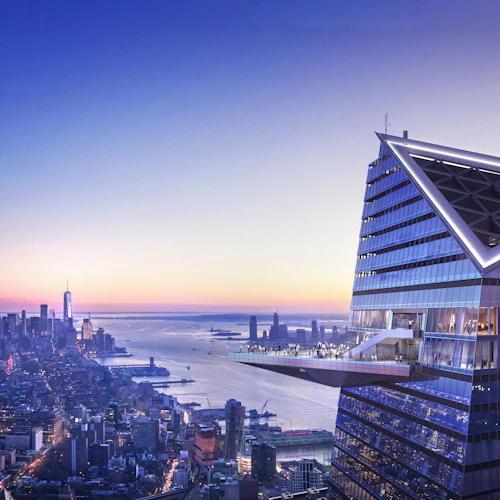 venuefromEUR 39
Edge NYC
Visit the highest outdoor sky deck in the Western Hemisphere by booking Edge New York tickets online for instant mobile access and guaranteed entry
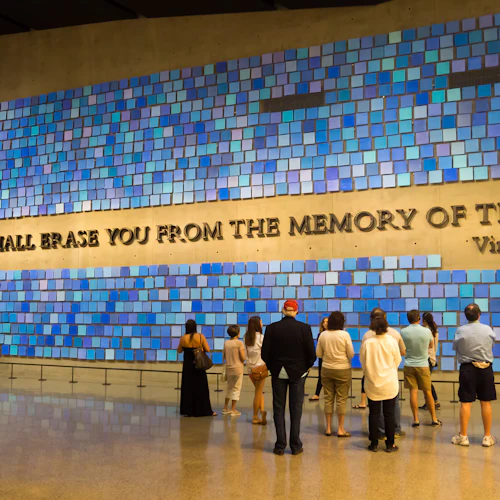 venuefromEUR 22
The 9/11 Memorial & Museum
Visit the 9/11 Memorial, a poignant tribute to 9/11, alongside the impactful 9/11 Museum exhibition
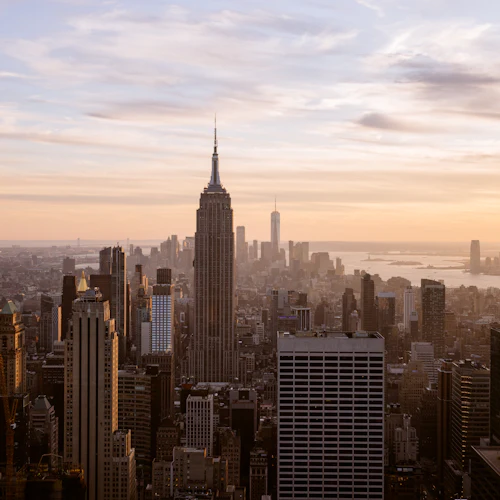 venuefromEUR 26
Top of the Rock
Capture New York City's skyline from the Rockefeller Center's observation deck

